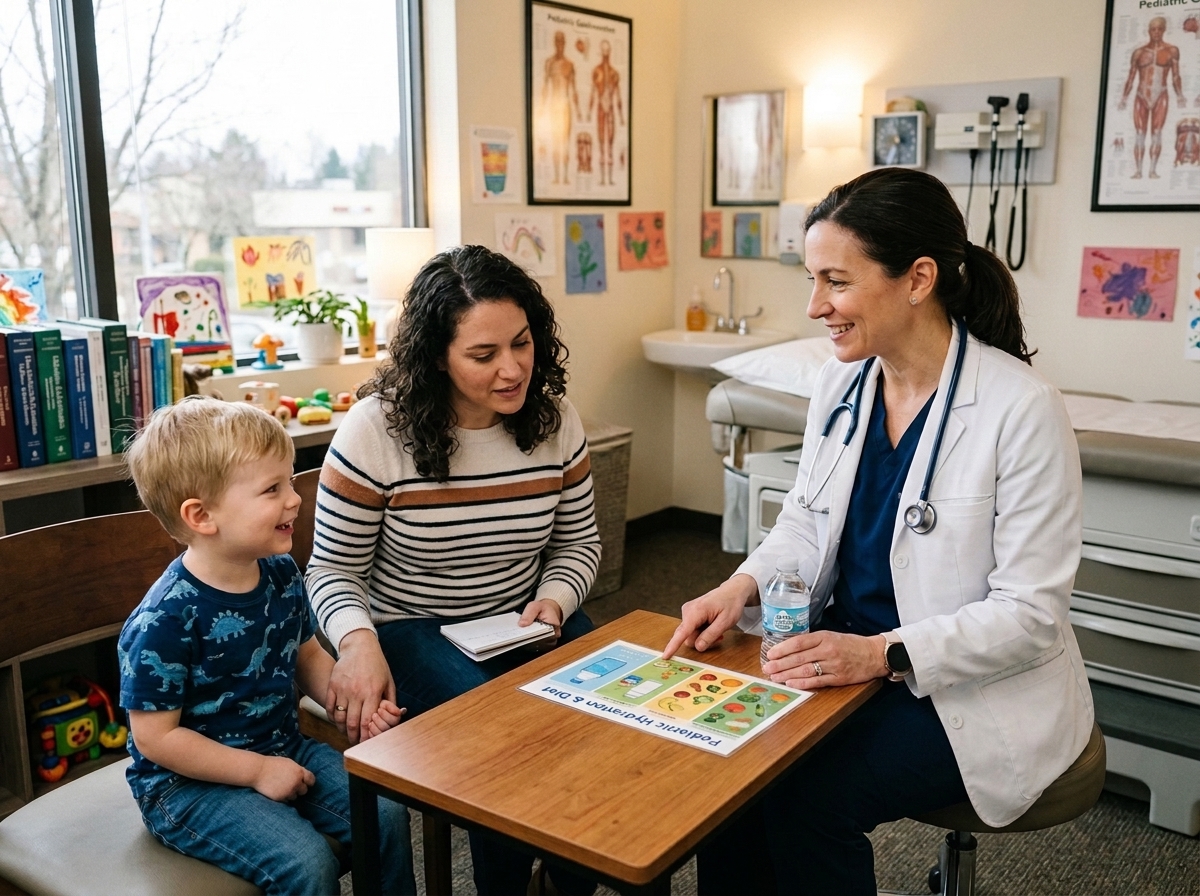
Finding clear answers and targeted relief for persistent loose stools, toddler's diarrhea, and malabsorption. Trust Tampa Bay's dedicated pediatric gastroenterologists to protect your child's hydration, nutrition, and healthy growth.
When loose stools linger, identifying the root cause protects your child's growth, hydration, and comfort.
Diarrhea in children is defined as passing three or more loose or watery stools within a single day. While most childhood diarrhea episodes are acute viral stomach bugs that clear up within a week, diarrhea that persists for more than 14 days—or becomes chronic over more than four weeks—signals a deeper digestive disruption.
Prolonged loose stools can lead to dehydration, electrolyte imbalances, painful diaper dermatitis, and poor weight gain. Whether caused by carbohydrate malabsorption, cow's milk protein allergy, post-viral mucosal blunting, or inflammatory bowel disease, our pediatric gastroenterologists pinpoint the precise mechanism to restore comfortable, normal digestion.
Sudden-onset watery stools typically sparked by viral gastroenteritis (rotavirus, norovirus) or food poisoning, requiring careful hydration monitoring.
Subacute loose stools often reflecting post-infectious lactase deficiency or secondary mucosal injury that hasn't fully healed.
Ongoing loose bowel movements indicating toddler's diarrhea, celiac disease, food allergies, IBD, or small intestinal bacterial overgrowth (SIBO).
Pediatric loose stools can stem from dietary imbalances, enzyme deficits, or immune-mediated gut inflammation. Our specialists systematically differentiate between them.
Excessive consumption of fruit juices, sorbitol, or high-sugar drinks paired with low healthy fat intake, speeding intestinal transit in healthy, thriving young children.
Temporary or permanent lactase enzyme deficiency following an infection, or congenital sucrose intolerance causing explosive, acidic stools, gas, and perianal redness.
Immune-mediated reactions to dietary gluten or cow's milk protein (allergic colitis) that cause blunted intestinal villi, nutrient malabsorption, and chronic loose stools.
Crohn's disease and ulcerative colitis causing chronic digestive tract inflammation, frequent bloody diarrhea, nocturnal waking, and weight loss.
Lingering pathogens such as Giardia, Clostridioides difficile, Cryptosporidium, or Salmonella requiring targeted stool testing and specific antimicrobial treatments.
An abnormal proliferation of colon-type bacteria within the small intestine, leading to early fermentation, bloating, foul-smelling loose stools, and vitamin deficiencies.
Because infants and young children can dehydrate rapidly, certain red flag symptoms indicate that pediatric diarrhea requires urgent medical evaluation:
PEDGI accommodates urgent requests for persistent childhood diarrhea within 2–5 business days.
We prioritize thoughtful, non-invasive testing first to quickly identify whether the diarrhea is osmotic, secretory, inflammatory, or malabsorptive.
Detailed analysis of daily beverage intake (juices, milk, sports drinks), recent antibiotic usage, travel history, and longitudinal growth velocity tracking.
PCR testing for parasites and enteric bacteria, fecal reducing substances (measuring unabsorbed sugars), fecal elastase (pancreatic health), and calprotectin (inflammation).
Tissue transglutaminase (tTG-IgA) testing to accurately screen for celiac disease, alongside complete blood count, electrolytes, and serum albumin levels.
Non-invasive breath tests for lactose/fructose malabsorption or SIBO. For suspected inflammatory conditions, pediatric upper endoscopy and colonoscopy are performed under gentle pediatric sedation.
Effective treatment focuses on rehydration, restoring mucosal integrity, and modifying dietary triggers tailored to your child's diagnosis.
Targeted electrolyte and glucose rehydration solutions formulated specifically to prevent dehydration without aggravating osmotic fluid shifts.
Eliminating concentrated fruit juices and sorbitol, balancing healthy fats and dietary fiber, or starting temporary lactose-free nutrition.
Enzyme replacement therapy (such as Sucraid for sucrose intolerance or pancreatic enzymes), specific antibiotics for SIBO, or anti-inflammatory drugs for IBD.
Close follow-up of growth trajectories, stool resolution, and perianal skin healing with our doctors and Physician Extenders.
One of the most reassuring insights for parents is distinguishing between benign rapid transit and true nutrient malabsorption.
In toddlers, the condition known as "toddler's diarrhea" (chronic nonspecific diarrhea) is common. Stools are loose and may contain recognizable peas, carrots, or corn. However, the child is bright, energetic, smiling, and gaining weight normally along their CDC growth chart. In contrast, malabsorptive diarrhea is accompanied by weight loss, muscle wasting, greasy foul stools, or severe lethargy. Our pediatric specialists quickly bring clarity to your family.
Never restrict your toddler's diet to plain water or plain toast without medical guidance. Our pediatric GI team provides clear, balanced nutritional plans that heal the gut without compromising calories.
Meet Our Specialist DoctorsProviding Tampa Bay families with comprehensive pediatric gastroenterology and digestive care since 1984.
Our clinical practice has been exclusively focused on pediatric gastroenterology and nutrition care across Tampa Bay since 1984.
We know chronic diarrhea and frequent diaper rashes make babies and toddlers fussy. Our care team is trained to deliver gentle, comforting care.
Our physicians and nurses communicate fluently in both English and Spanish to ensure full parent confidence.
Urgent cases for persistent diarrhea and dehydration concerns are scheduled within 2 to 5 business days across Tampa, Lakeland, Bloomingdale, and Odessa.
Have questions about your child's loose stools, hydration, or toddler's diarrhea? Here are answers from our pediatric GI team.
View All General FAQsAcute diarrhea typically lasts less than 7 to 14 days and is commonly caused by viral stomach bugs. Diarrhea is clinically classified as persistent when it continues between 2 and 4 weeks, and chronic when loose, watery stools persist for more than 4 weeks. Chronic diarrhea requires comprehensive evaluation by a pediatric gastroenterologist.
Toddler's diarrhea (chronic nonspecific diarrhea of childhood) is a benign motility condition common between ages 1 and 3. Children pass multiple loose, watery stools during the day—often containing undigested food fragments—but remain happy, energetic, and continue growing along their normal growth curves. It is typically resolved through dietary balancing.
Yes, very frequently. Apple juice, pear juice, and sweetened drinks contain high amounts of fructose and sorbitol. Young digestive tracts cannot absorb excessive simple sugars, creating an osmotic pull that draws water into the large intestine and causes watery stools.
Key signs of pediatric dehydration include crying without tears, dry lips or sticky mouth, sunken eyes or sunken soft spot (fontanelle) in infants, lethargy or unusually high fussiness, and going more than 6 to 8 hours without producing a wet diaper or urinating.
No. Over-the-counter anti-diarrheal medications are not recommended for infants and young children unless specifically prescribed by a physician. They can paralyze intestinal motility and cause dangerous complications. The focus must be on oral electrolyte rehydration and finding the underlying medical cause.
PEDGI prioritizes children suffering from lingering diarrhea, stomach pain, or suspected malabsorption. Urgent requests are typically scheduled within 2 to 5 business days across our four Tampa Bay clinic locations. View our Insurance Page for coverage details.
Get clear answers and expert relief for your child's digestive symptoms from Tampa Bay's trusted pediatric gastroenterologists.