(813) 870-4438 Mon–Fri: 8:30 AM – 12:00 PM & 1:00 PM – 4:30 PM Tampa · Lakeland · Bloomingdale · Odessa
Make a Payment
Pediatric GI Specialists Since 1984

Acid Reflux & GERD in Children

Gentle evaluation and proven relief for children's acid reflux and GERD. Trust Tampa Bay's leading pediatric gastroenterology specialists for personalized, long-term digestive comfort.

40+
Years of Care
4
Tampa Bay Offices
0–21
Age Range

Pediatric gastroenterologist for acid reflux examining a child with compassionate care

Expert Care for Pediatric Acid Reflux & GERD

Helping your child eat, sleep, and grow without the discomfort of acid reflux brings relief to the whole family.

Acid reflux in children occurs when stomach contents flow back up into the esophagus. While mild spitting up is common in infants, persistent reflux that causes pain, irritability, poor weight gain, or respiratory difficulty is diagnosed as Gastroesophageal Reflux Disease (GERD).

Children experience reflux differently depending on their age. Infants may arch their backs during feedings, while older children describe chest burning, sour taste, or regurgitation. A dedicated pediatric gastroenterologist for acid reflux provides the subspecialty care needed to distinguish temporary reflux from chronic GERD and create a safe treatment plan.

Parent Support & Education Learn more about reflux management on our Educational Resources page.

Understanding Reflux Across Age Groups

Infant Reflux (Physiologic Reflux)

Immaturity of the lower esophageal sphincter muscle. Most infants outgrow spitting up by 12 to 18 months of age.

Pediatric GERD

Reflux that causes tissue inflammation (esophagitis), vocal cord irritation, feeding refusal, or poor weight gain.

Eosinophilic Esophagitis (EoE)

An allergic esophageal condition mimicking GERD symptoms that requires subspecialty GI biopsy and dietary therapy.

Common Causes of Children's Acid Reflux

Acid reflux in children stems from anatomical, dietary, or allergic factors. Our pediatric GI specialists thoroughly evaluate each underlying trigger.

Sphincter Immaturity (LES)

Underdeveloped lower esophageal sphincter muscle in infants allowing stomach contents to travel upward easily.

Food Intolerances & Allergies

Cow's milk protein allergy or food sensitivities triggering esophageal inflammation, vomiting, and acid hypersecretion.

Eosinophilic Esophagitis (EoE)

Allergic white blood cell buildup in the esophagus causing chronic reflux symptoms, food impaction, and painful swallowing.

Delayed Gastric Emptying

Slow stomach emptying (gastroparesis) that increases intragastric pressure, forcing stomach acid into the esophagus.

Hiatal Hernia & Motility Factors

Anatomical positioning changes of the upper stomach or altered esophageal motility that impair natural acid clearance.

Dietary & Lifestyle Triggers

High-fat foods, citrus, carbonated beverages, large bedtime meals, or passive smoke exposure exacerbating reflux.

Warning Signs for Parents

When to Seek Immediate Medical Evaluation

While mild infant spitting up is common, certain "red flag" symptoms indicate that children's acid reflux requires subspecialty GI care:

Vomiting blood or dark coffee-ground material
Persistent green or yellow bile in vomit
Painful arching of the back or crying during feedings
Difficulty swallowing, choking, or feeling food get stuck
Poor weight gain or dropping across growth percentiles
Chronic night coughing, wheezing, or recurrent pneumonia

Book an Appointment

PEDGI accommodates urgent pediatric gastroenterology requests within 2–5 business days.

How Acid Reflux Is Evaluated at PEDGI

We believe in a thoughtful, step-by-step diagnostic journey tailored specifically for children. Our gentle approach focuses on non-invasive assessments first.

1
Child-Centered Clinical History

Detailed review of feeding habits, posture, symptom timing, sleep disruption, and growth trends.

2
Dietary & Formula Elimination Trial

Evaluating potential milk protein allergy or food triggers with hypoallergenic formula or elimination diets.

3
pH / Impedance Probe Study (When Needed)

Measuring acid and non-acid reflux frequency and correlating events with respiratory or coughing episodes.

4
Upper Endoscopy (EGD) & Biopsy

Visualizing esophageal lining and taking tissue samples under gentle pediatric sedation to check for esophagitis or EoE.

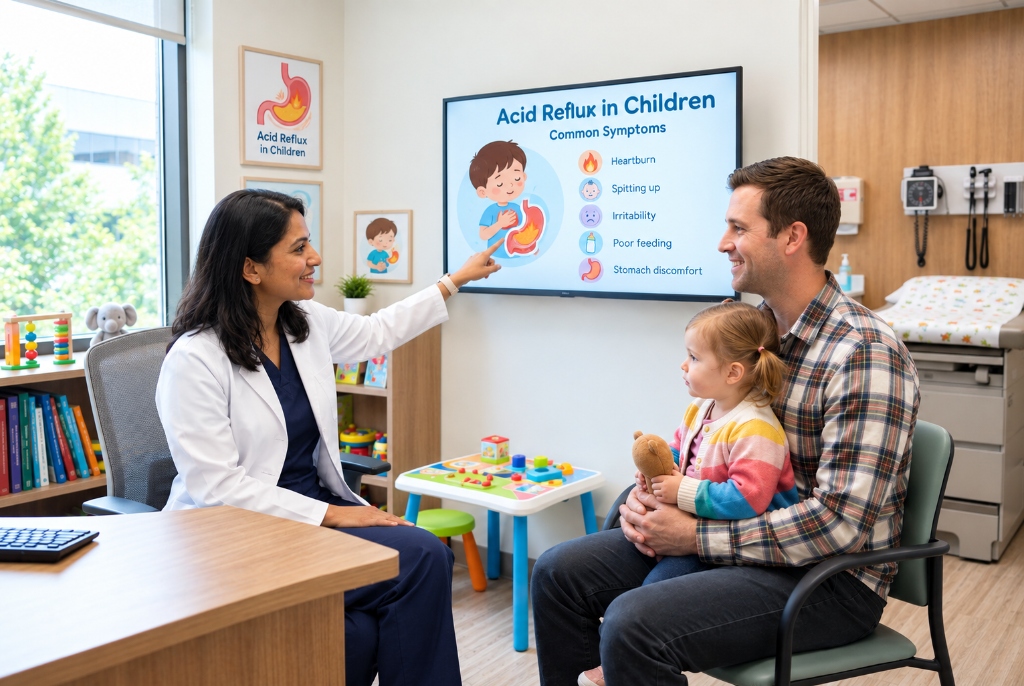
Pediatric gastroenterologist explaining acid reflux evaluation plan to mother and child

Pediatric GERD Treatment & Management

Effective pediatric GERD treatment combines lifestyle adjustments, dietary modifications, and safe medical therapy tailored to your child's age.

Postural & Feeding Changes

Upright post-feeding positioning, smaller frequent meals, and formula thickening under pediatric guidance.

Targeted Pharmacotherapy

Pediatric-safe acid suppressants (H2 blockers or PPIs) prescribed for defined durations under specialist oversight.

Dietary Elimination Therapy

Identifying and removing trigger foods or milk allergens to reduce esophageal inflammation and acid surges.

Ongoing GI Monitoring

Regular follow-ups with our doctors and Physician Extenders to ensure complete symptom relief.

Specialized Focus Area

Infant Spitting Up vs. True Pediatric GERD

One of the most comforting things for parents to know is that frequent spitting up in babies is usually normal and temporary.

Most babies who spit up frequently are known clinically as "happy spitters"—they gain weight well, smile after feedings, and experience no distress. True GERD in children occurs only when reflux causes pain, feeding refusal, respiratory symptoms, or poor growth. Our pediatric GI team helps families avoid unnecessary medications while protecting infants who truly need medical care.

Reassuring subspecialty evaluation
Avoiding unnecessary infant medications
Safe formula & feeding position guidance
Restoring peaceful infant sleep

Key Parent Takeaway

Our pediatric gastroenterology team validates your concerns and crafts clear, reassuring care plans so your child can eat comfortably.

Meet Our Specialist Doctors

Why Families Trust PEDGI

Providing Tampa Bay families with world-class pediatric GI subspecialty care since 1984.

Board-Certified Specialists 4 Locations Bilingual Staff Fast Appointments

Dedicated Pediatric Reflux Specialists in Tampa Bay

40+ Years of Subspecialty Excellence

Our practice has exclusively focused on pediatric gastroenterology, liver, and nutrition care in West Central Florida since 1984.

Warm, Child-Centered Environment

We know feeding issues and acid burning can be frightening for children. Every member of our care team is trained to make visits gentle and anxiety-free.

Multilingual Compassionate Care

Our doctors and clinical staff provide fluent care in both English and Spanish to support our diverse Tampa Bay community.

Prompt Appointment Availability

Urgent cases are scheduled within 2 to 5 business days across Tampa, Lakeland, Bloomingdale, and Odessa clinics.

Our 4 Tampa Bay Locations

Expert pediatric gastroenterology care close to home across Hillsborough and Pasco counties.

Tampa

3003 W M.L.K. Jr Blvd
Tampa, FL 33607

(813) 870-4438

Location Details
Lakeland

1417 Lakeland Hills Blvd
Lakeland, FL 33805

(813) 870-4438

Location Details
Bloomingdale

2470 Bloomingdale Ave
Valrico, FL 33596

(813) 324-2613

Location Details
Odessa

14111 State Road 54
Odessa, FL 33556

(813) 870-4438

Location Details

Acid Reflux Questions Answered

Have questions about your child's acid reflux or preparing for a specialist visit? Here are common answers from our pediatric GI team.

View All General FAQs
What is the difference between normal infant spitting up and GERD?

Normal infant reflux ('happy spitting') causes frequent spitting up without pain, distress, or growth problems. Gastroesophageal Reflux Disease (GERD) occurs when acid reflux causes painful crying, food refusal, arching during feeding, poor weight gain, or respiratory symptoms.

What are the signs of acid reflux in older children and teens?

In older children, acid reflux symptoms include heartburn, chest or upper abdominal burning, frequent regurgitation, sour taste in the mouth, chronic throat clearing, difficulty swallowing, or chronic cough.

When should we see a pediatric gastroenterologist for acid reflux?

You should consult a pediatric gastroenterologist if your child experiences painful reflux that interferes with sleep or feeding, poor weight gain, difficulty or pain when swallowing, blood in vomit/stool, or symptoms that persist despite primary pediatric care.

How is GERD diagnosed in children?

Diagnosis typically begins with a detailed medical history and dietary trial. When necessary, specialists utilize non-invasive imaging, pH/impedance probe studies, or upper endoscopy (EGD) with biopsies to evaluate esophageal inflammation.

Are acid reflux medications safe for children?

Yes. When clinically indicated, pediatric gastroenterologists prescribe safe, weight-adjusted medications such as H2 blockers or proton pump inhibitors (PPIs) under strict medical supervision.

How quickly can my child be seen at PEDGI for GERD?

PEDGI prioritizes timely evaluation for uncomfortable children. Urgent reflux and GERD requests are typically seen within 2 to 5 business days across our four Tampa Bay clinic locations.

Schedule Your Child's Acid Reflux Evaluation Today

Get clear answers and expert relief for your child's acid reflux from Tampa Bay's trusted pediatric GI specialists.